

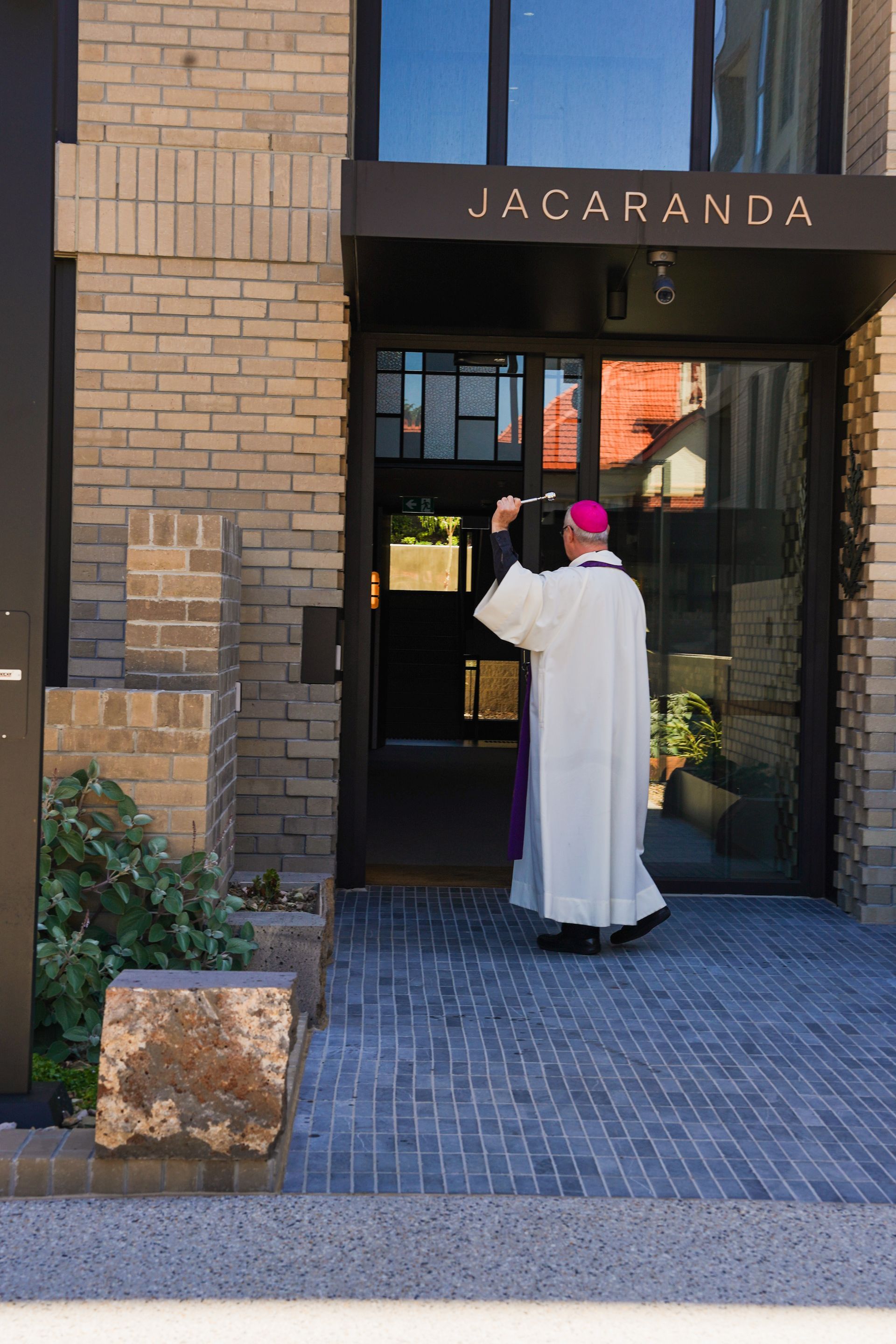
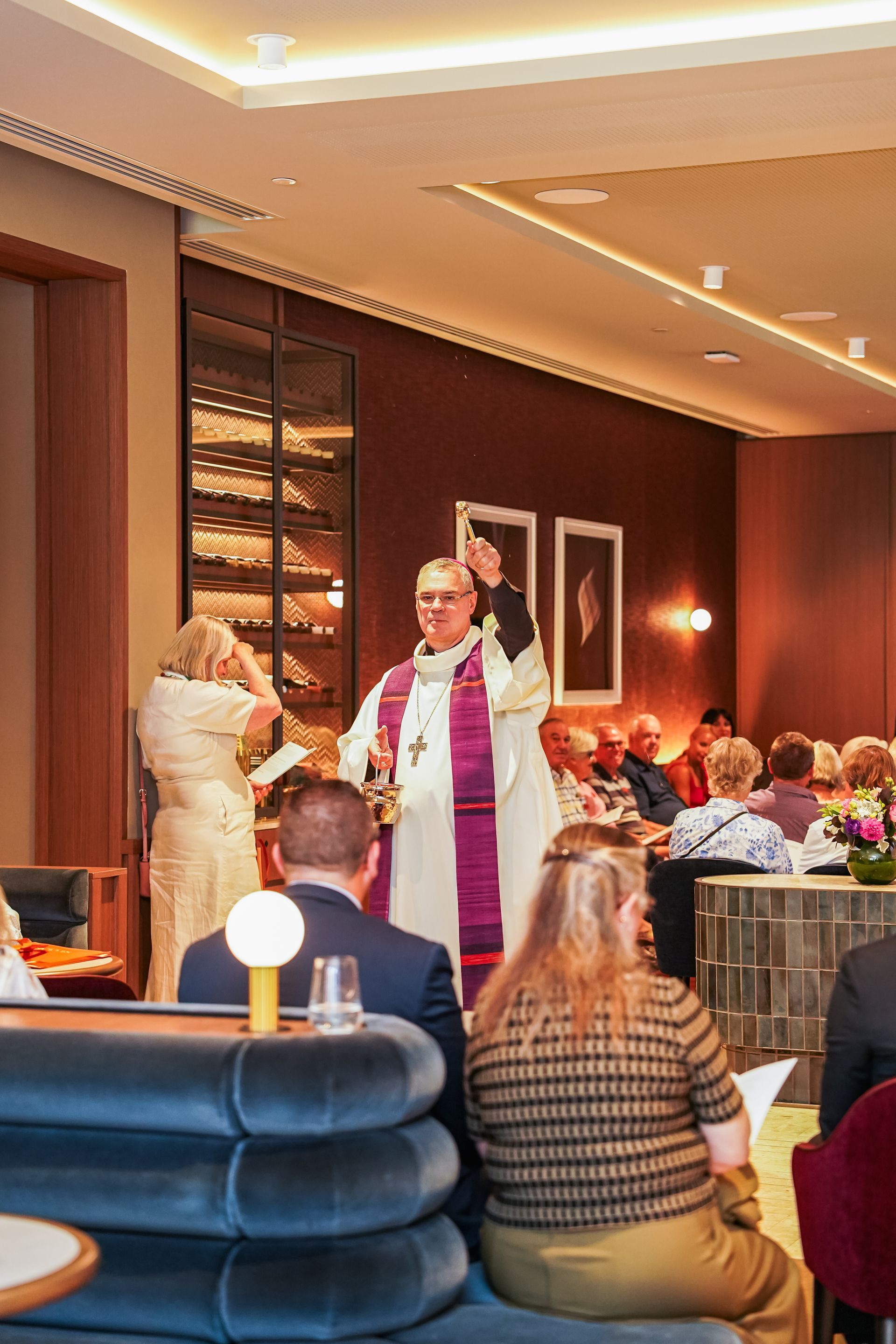
On 20 February 2026, St Clare - Villa Maria Catholic Homes' landmark retirement living precinct in Kew - was officially blessed by the Most Rev Peter A. Comensoli, Archbishop of Melbourne. The occasion brought together residents, partners and supporters to give thanks for what had been built, and to look forward to what it would make possible.
For CDF, the sole lender of the major project, the occasion was a meaningful reminder that careful stewardship and mission-aligned lending create outcomes that endure - not just beautiful spaces, but dignity, security and hope for people who need it most.
A Vision Realised
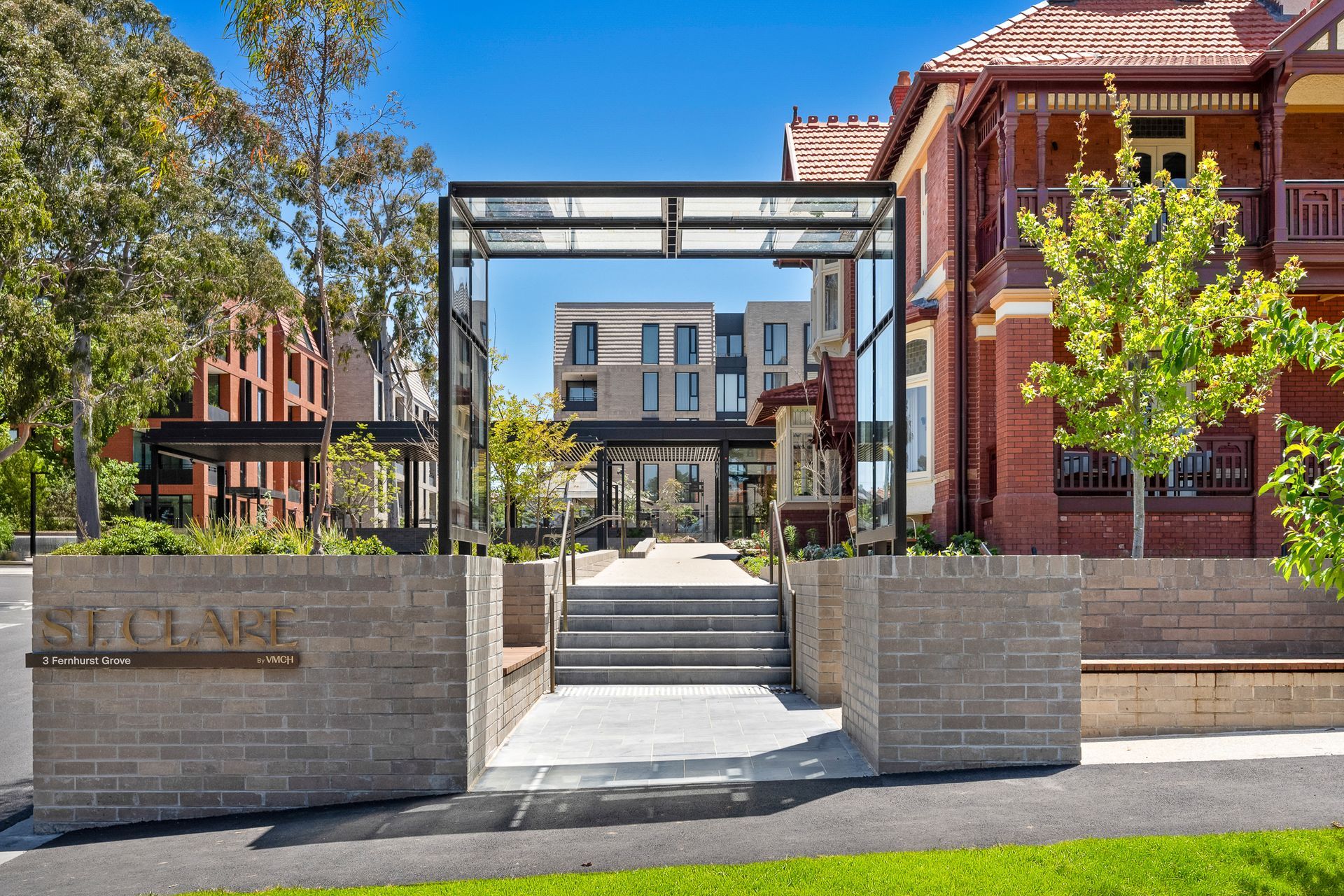
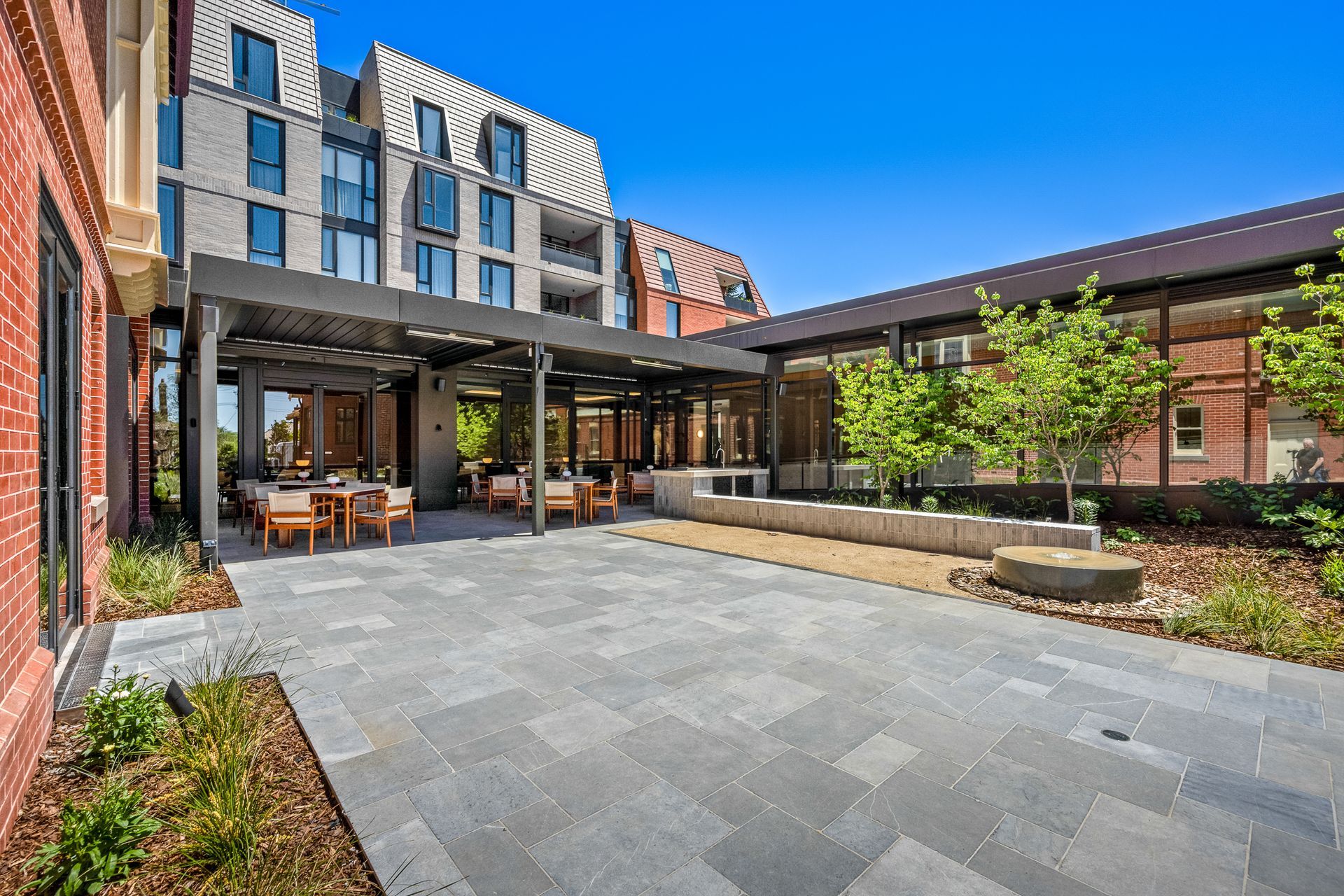
Designed by internationally recognised architects Woods Bagot, St Clare comprises 103 premium senior living residences on a 1.4-hectare site in the heart of Kew. More than half the site has been retained as open space, with landscaped gardens and shared amenities that foster connection and a genuine sense of place.
Two restored heritage buildings serve as community hubs, and sustainability has been embedded throughout; from rooftop solar to rainwater harvesting.
St Clare welcomed its first residents in December 2025, ahead of schedule and with more than 85 per cent of residences reserved as the precinct opened. The response speaks to the confidence people have in VMCH’s long-standing commitment to care, community and purpose.
“We thank the Catholic Development Fund for its support of this development, from which profits generated will be reinvested to support the core Mission of VMCH.”
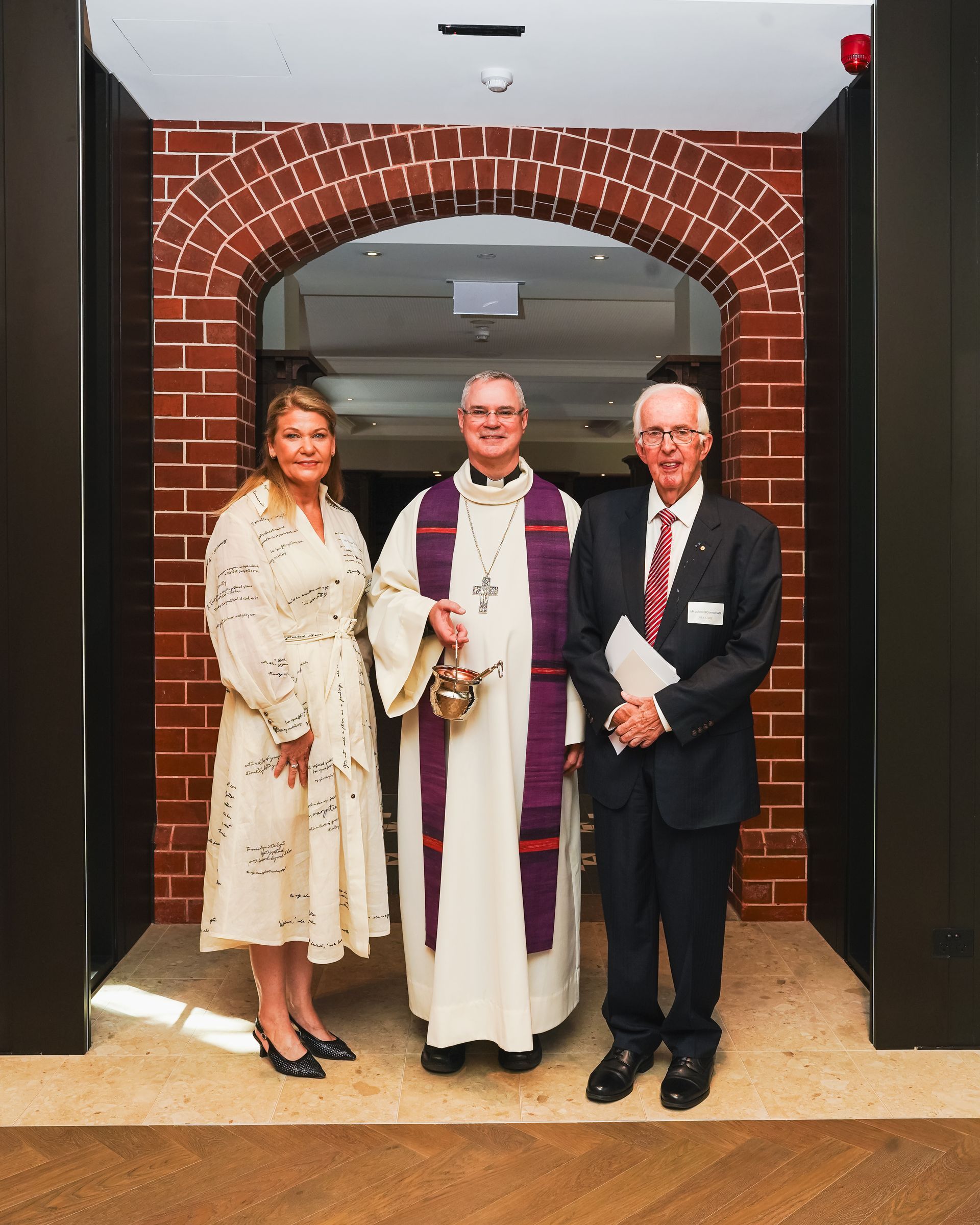
Sonya Smart (CEO, VMCH) and Julien O’Connell AO (Chair of the Board, VMCH).
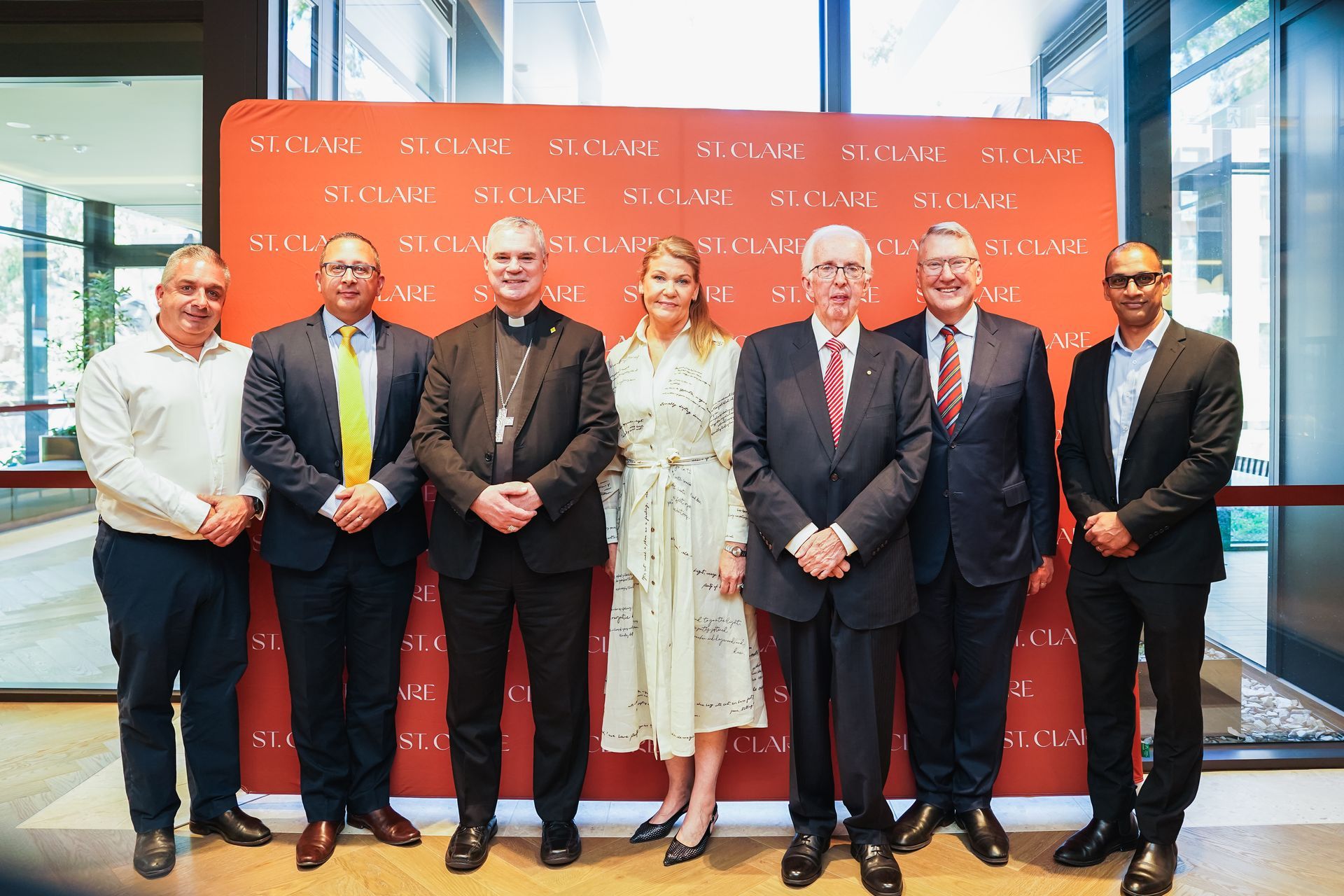
Pictured (left to right): Brendan Hoy (CDF), Andrew Carman (CDF), Archbishop Peter A. Comensoli, Sonya Smart (VMCH), Julien O'Connell (VMCH), Tim O'Leary (Catholic Archdiocese of Melbourne), Gerard Bibile (CDF).
Funding from Within
CDF provided $185 million in lending support to bring St Clare to life. That investment reflects our purpose to balance margin and mission, for the common good – supporting Catholic organisations in their own mission.
“We thank the Catholic Development Fund for its support of this development, from which profits generated will be reinvested to support the core Mission of VMCH.” - Sonya Smart, CEO, and Julien O’Connell AO, Board Chair, VMCH.
Mission that Reaches Further
The success of St Clare is not an end in itself. Proceeds from the development will be reinvested by VMCH into affordable housing and specialist disability housing across Victoria - ensuring that those most vulnerable are not left behind.
VMCH Board Chair, Julien O’Connell AO, put it simply at the blessing ceremony:
“Retirement living developments like St Clare enable VMCH to turn purpose into action, supporting initiatives such as affordable housing for older people on low incomes. It was fitting that this place was blessed as residents continue to build their lives and community here.”
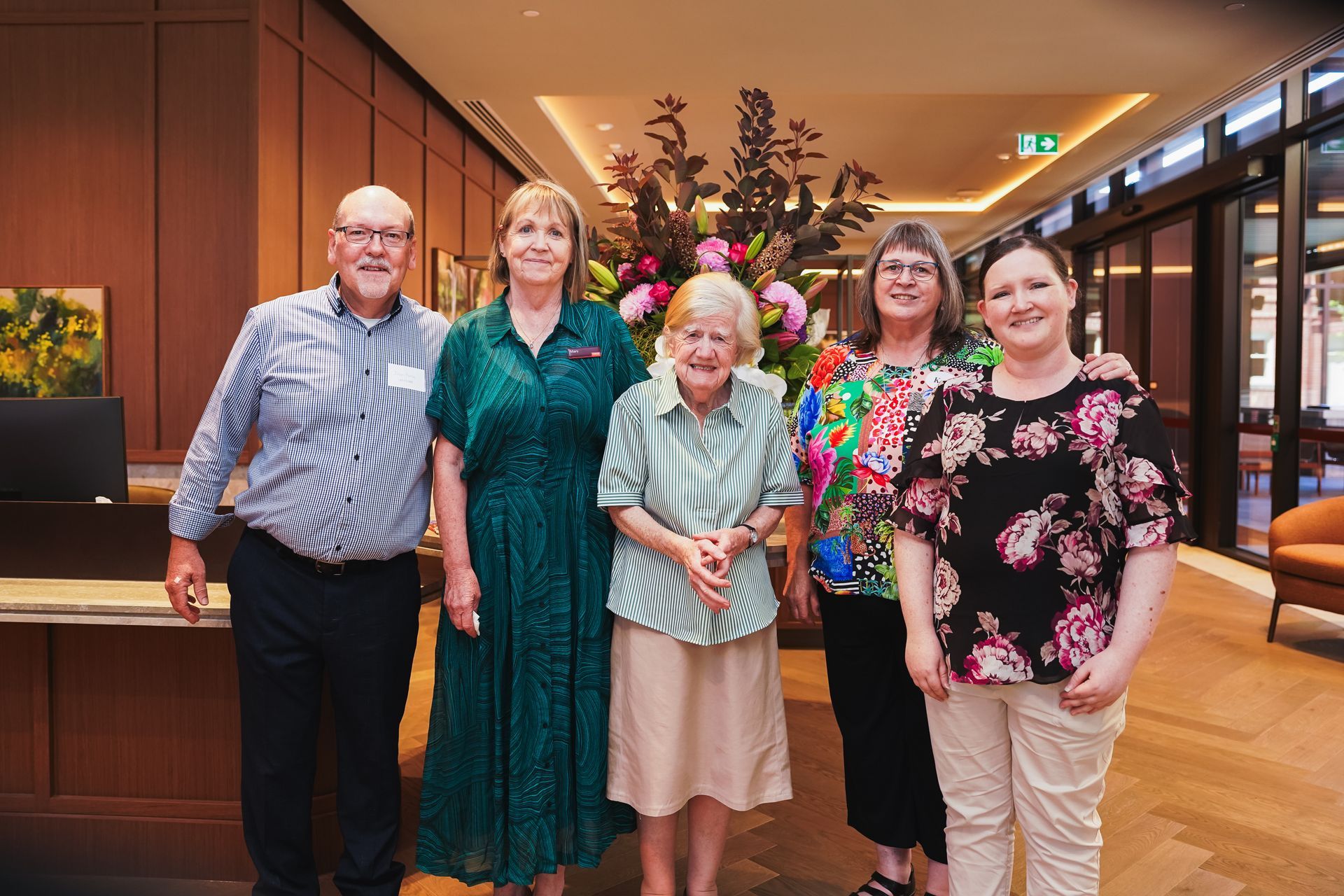
More than 50 residents attended the blessing, a sign of the community already taking root. Representatives from the Catholic Archdiocese of Melbourne, CDF, and the VMCH Board and Executive joined them to mark the special occasion.
To help CDF continue to meet strong loan demand from the Catholic community, you too can put your faith in action and save for a greater reward than money alone. Not only will you earn a competitive rate of interest, but your savings will assist organisations like VMCH, and other Catholic agencies to continue the work the Gospel calls on them to do. Learn more and apply today.
Images courtesy of Villa Maria Catholic Homes.
Share this article:
Related articles


CDPF Limited, a company established by the Australian Catholic Bishops Conference, has indemnified the Catholic Development Fund ABN 15 274 943 760 (the Fund) against any liability arising out of a claim by investors in the Fund. In practice, this means your investment is backed by the assets of the Catholic Archdiocese of Melbourne. The Fund is required by law to make the following disclosure. Investment in the Fund is only intended to attract investors whose primary purpose for making their investment is to support the charitable purposes of the Fund. Investors’ funds will be used to generate a return to the Fund that will be applied to further the charitable works of the Archdiocese of Melbourne and the Dioceses of Sale and Bunbury. The Fund is not prudentially supervised by the Australian Prudential Regulation Authority nor has it been examined or approved by the Australian Securities and Investments Commission (ASIC). An investor in the Fund will not receive the benefit of the financial claims scheme or the depositor protection provisions in the Banking Act 1959 (Cth). The investments that the Fund offers are not subject to the usual protections for investors under the Corporations Act (Cth) or regulation by ASIC. Investors may be unable to get some or all of their money back when the investor expects or at all and investments in the Fund are not comparable to investments with banks, finance companies or fund managers. The Fund’s identification statement may be viewed here or by contacting the Fund. The Fund does not hold an Australian Financial Services Licence.