

Catholic agency leaders are being urged to face a world of "brutal realities" with clear purpose, disciplined leadership and hope.
At the recent
CDF Catholic Connect workshop, leading economist Ivan Calhoun warned that AI, geopolitics, inflation and productivity pressures are reshaping the environment in which Catholic organisations operate.
Insights from Leading Catholic Sector Voices
- Professor Elizabeth Labone – Chief Executive Officer, Victorian Catholic Education Authority (VCEA)
- Virginia Bourke – Chair, Mercy Health
- Martin Teulan – Chief Executive Officer, Association of Ministerial Public Juridic Persons (AMPJP)
- John McClusky – Chief Executive Officer, Catholic Development Fund (CDF)
- Ivan Colhoun – Independent Economist
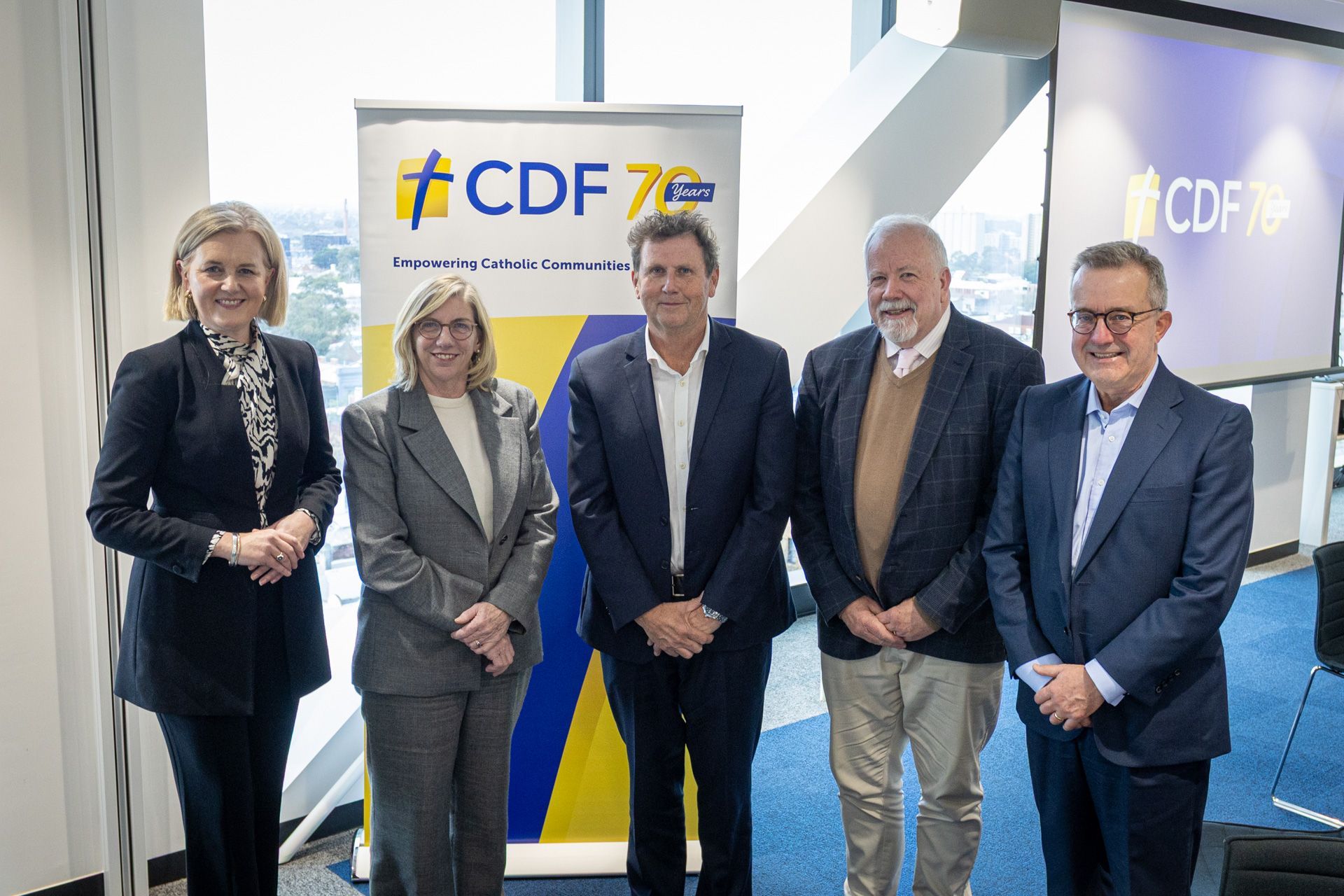
CDF Catholic Connect panelists from left to right: Virginia Bourke, Prof. Elizabeth Labone, Ivan Colhoun, Martin Tuelan and John McClusky
Navigating change with confidence and purpose
The event, Economic Outlook: Navigating Change with Confidence and Purpose, hosted by Catholic Development Fund (CDF), saw a panel of speakers from Catholic agencies and aligned organisations examined the practical implications of leading through uncertainty, workforce and operational pressures, stewardship, mission and future opportunities.
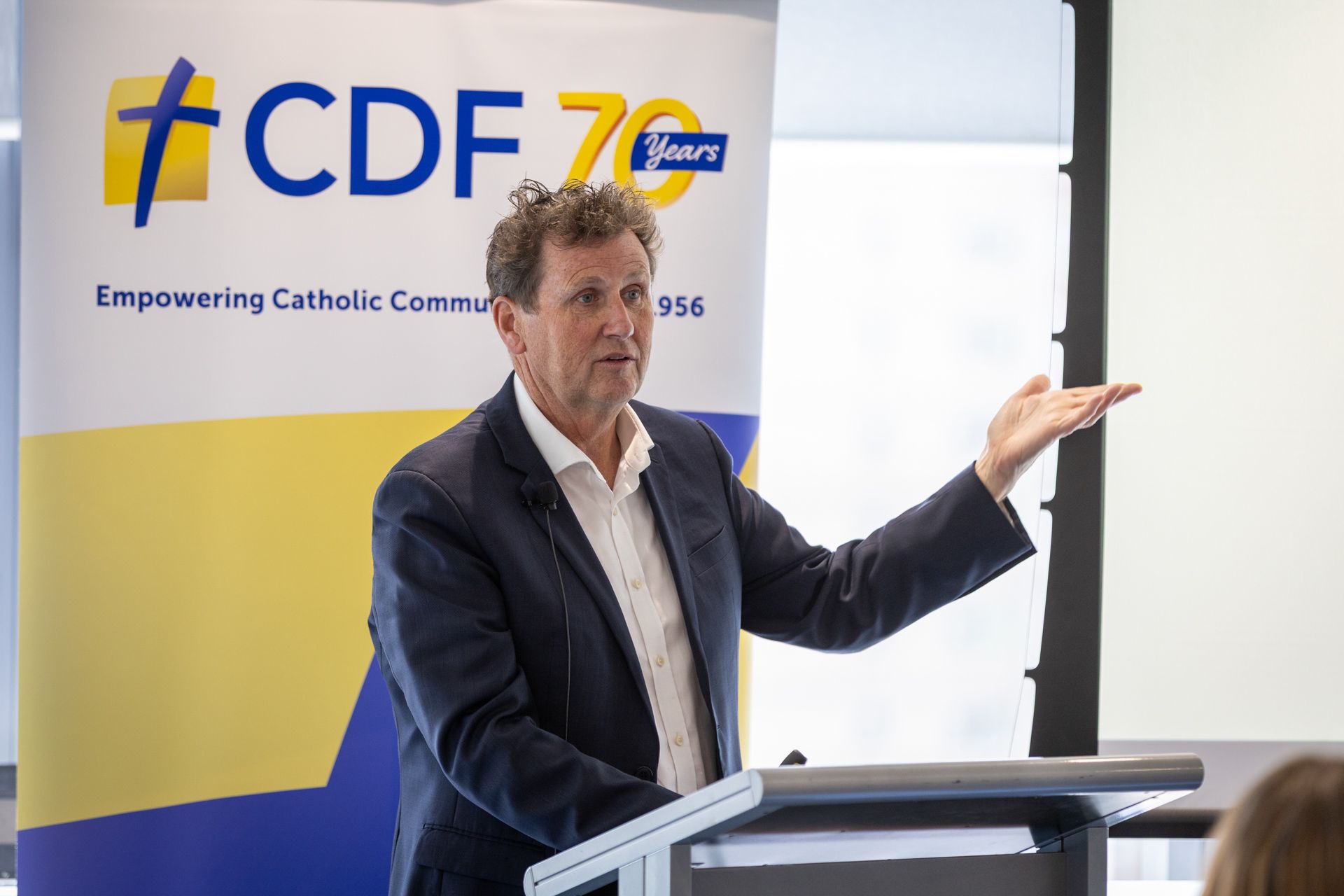
Mr Ivan Colhoun said the sector is being hit by a mix of long-term megatrends - the "top five" being technological change, climate change, ageing populations, geopolitics and inequality - and immediate shocks that are already affecting service delivery, budgets and strategic planning.
Two of those megatrends are being experienced in issues that are "really big right at the moment", he said: "Obviously geopolitics and what's happening in the Middle East, and then the second big issue is AI."
Focusing on what organisations can control
The economic effects are being felt through oil prices, inflation and interest rates, he said, with recent geopolitical events showing how quickly global shocks flow through to local budgets and service delivery.
In parallel, AI is driving both a short-term investment boom and longer-term questions about jobs, taxation and the shape of society.
Mr Calhoun said the challenge for leaders is to remain realistic without being paralysed by uncertainty, and to focus on productivity as something they can control.
"Every organisation to a certain extent determines its own productivity," he said, noting that the "first step" is to design "some productivity measures that are relevant to your organisation".


Mission drives excellence
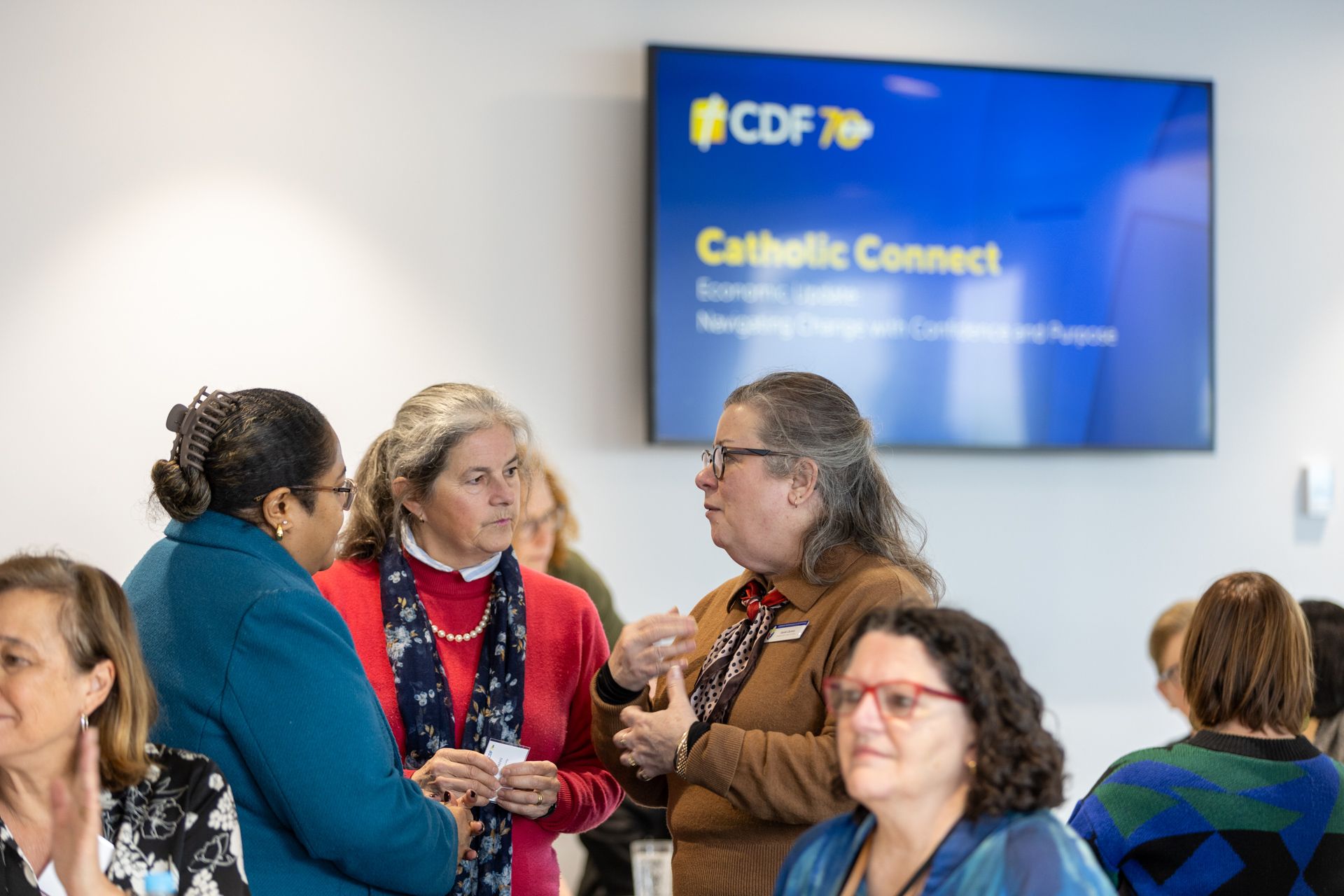
The panel discussion that followed Ivan's keynote presentation took up the same themes from the perspectives of health, education and finance.
.
Mercy Health Chair Virginia Bourke said there is "a perennial tension between financial challenge and sustaining our mission", while warning that public health funding, workforce costs and population growth were placing acute strain on the sector.
Ms Bourke said Catholic organisations could not afford to treat mission and excellence as separate ideas. "I'd say that really it's the mission that drives excellence," she said, adding that leaders needed "absolute clarity" about why their organisations exist and how strategy aligns with that purpose.
She said Catholic agencies must be willing to face difficult realities while still holding onto hope. "We are people of hope, people of faith. We have to keep going, no matter what the reality is," shared Ms Bourke.
"We are people of hope, people of faith.
We have to keep going, no matter what the reality is."



Telling the Catholic education story
Catholic education faces a similar squeeze, according to Victorian Catholic Education Authority Chief Executive Professor Elizabeth Labone, who said the sector is in a constant battle to secure funding for schools and capital needs amid claims it is overfunded.
"In that debate, we're always up against false narratives, and they are the dominant part of media reporting on school funding," Prof Labone said.
She pointed to evidence showing Catholic schooling delivers strong long-term outcomes, from employment and wages to health, life satisfaction and charitable giving, arguing that the sector needs to do more to communicate its value to the broader community.
Supporting mission through partnership
CDF Chief Executive John McClusky said his organisation's role was to help agencies think long-term and find practical solutions through tightening financial conditions.
"Purpose is really important. That's why you exist," he said, describing CDF as a partner
that helps Catholic organisations build, serve and grow.
He said the task went beyond providing finance to supporting mission in ways that are flexible enough to meet the different needs of schools, parishes, aged care providers and other Catholic agencies.
Panel facilitator Martin Teulan of the Association of Ministerial Public Juridic Persons (AMPJP) expanded the discussion to parishes, saying Catholic organisations at every level need to think carefully about stewardship, fundraising and assets.
He said parishes and agencies should make sure their real estate is "working for you", and noted that bequests remain a largely underused source of support across the sector.
More broadly, he argued that Catholic organisations need clear purpose and strong fundraising plans if they are to sustain their mission over time.
The overall message from the panel was that Catholic agencies will be best placed to weather the years ahead if they keep their mission clear and continue to pair prudence with courage.
Mr McClusky summed it up, saying the Catholic sector's strength lies in collaboration.
Full Story: Melbourne Catholic
Images: Catholic Development Fund
Share this article:
Related articles



CDPF Limited, a company established by the Australian Catholic Bishops Conference, has indemnified the Catholic Development Fund ABN 15 274 943 760 (the Fund) against any liability arising out of a claim by investors in the Fund. In practice, this means your investment is backed by the assets of the Catholic Archdiocese of Melbourne. The Fund is required by law to make the following disclosure. Investment in the Fund is only intended to attract investors whose primary purpose for making their investment is to support the charitable purposes of the Fund. Investors’ funds will be used to generate a return to the Fund that will be applied to further the charitable works of the Archdiocese of Melbourne and the Dioceses of Sale and Bunbury. The Fund is not prudentially supervised by the Australian Prudential Regulation Authority nor has it been examined or approved by the Australian Securities and Investments Commission (ASIC). An investor in the Fund will not receive the benefit of the financial claims scheme or the depositor protection provisions in the Banking Act 1959 (Cth). The investments that the Fund offers are not subject to the usual protections for investors under the Corporations Act (Cth) or regulation by ASIC. Investors may be unable to get some or all of their money back when the investor expects or at all and investments in the Fund are not comparable to investments with banks, finance companies or fund managers. The Fund’s identification statement may be viewed here or by contacting the Fund. The Fund does not hold an Australian Financial Services Licence.