

Last month, St Columba’s College celebrated the blessing and official opening of its brand new Foxford Innovation Centre. The state-of-the-art facility is the result of a 20-year vision, designed to transform educational opportunities for students through a focus on STEAM (Science, Technology, Engineering, Arts, and Mathematics) education.
Supported by a $13 million loan from CDF, the Centre blends modern innovation with the heritage architecture of the College campus; it features cutting-edge facilities, including food technology kitchens, maker spaces, arts and science classrooms, specialist labs, a canteen, and a competition-grade sports court.
The Centre is named after the Foxford Woollen Mills in Ireland, honouring the legacy of Mother Agnes Morrogh-Bernard, a Sister of Charity who founded the mills in 1892. Her vision and leadership transformed a struggling community, embodying the values of innovation, inclusivity, and collaboration.
Principal Rita Grima reflected on the significance of the Centre, stating, “The Foxford Innovation Centre embodies the spirit of Mother Agnes Morrogh-Bernard, whose courage and vision brought hope and opportunity to her community. At St Columba’s College, we share this commitment to creating a learning environment that fosters collaboration, creativity, and inclusivity, preparing our students for their unfolding futures.”

Bishop Rene Ramirez RCJ, St Columba's Principal Rita Grima and Fr Anthony Doran

College Captains: Martine and Jemma

Milton Balazs (Relationship Manager, CDF), Malcolm Finger (Business Manager, St Columba's College) and Brendan Hoy (General Manager, CDF)
“Our relationship with CDF has been strengthened by the professionalism and problem-solving capacity of the CDF team as we have collectively worked together on the funding requirements for the College's biggest building project.”
Malcolm Finger, Business Manager, St Columba's College
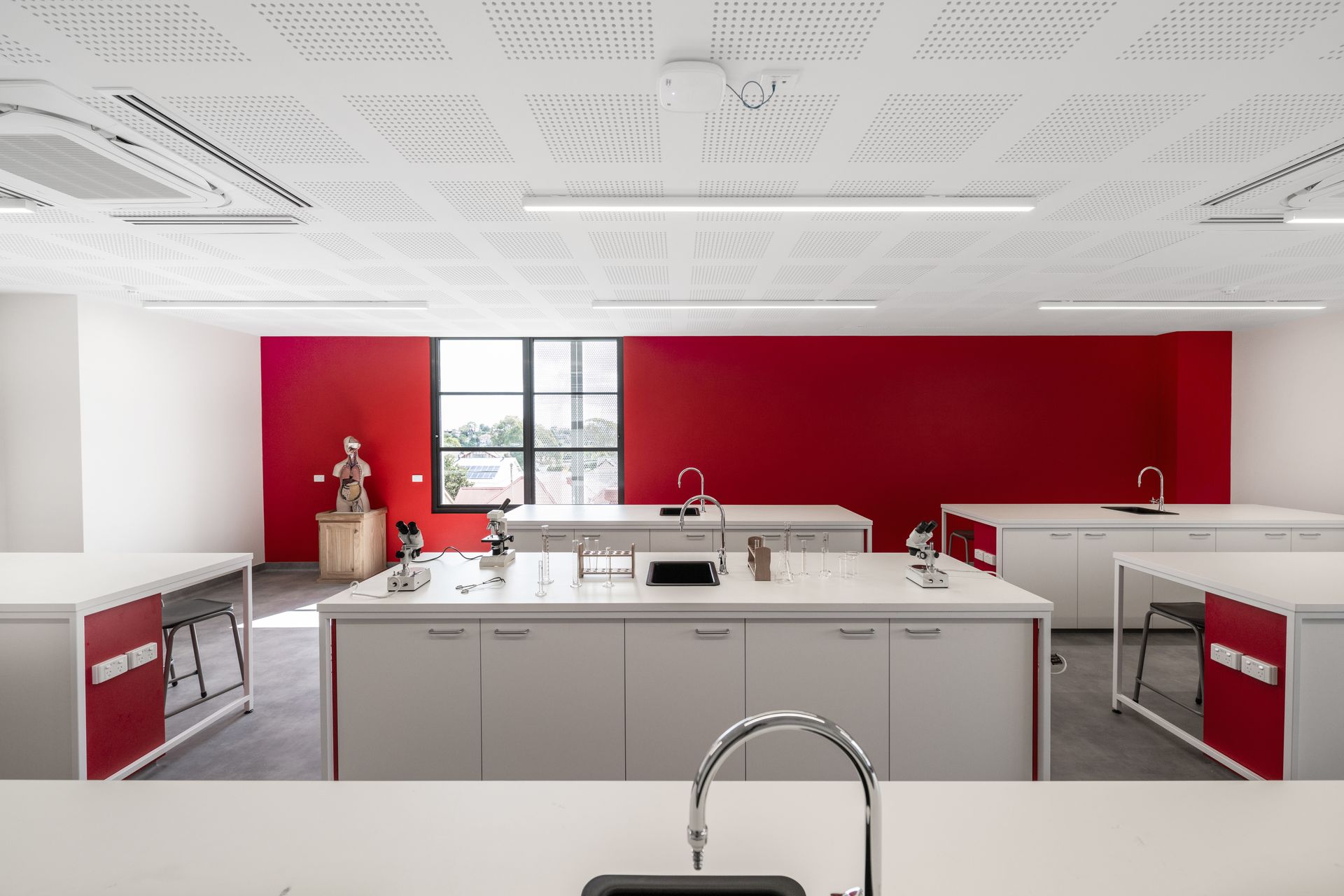


The Foxford Innovation Centre is a valuable addition to St Columba’s College, providing modern facilities and resources that will support students' learning and development for years to come.



Share this article:
Related articles



CDPF Limited, a company established by the Australian Catholic Bishops Conference, has indemnified the Catholic Development Fund ABN 15 274 943 760 (the Fund) against any liability arising out of a claim by investors in the Fund. In practice, this means your investment is backed by the assets of the Catholic Archdiocese of Melbourne. The Fund is required by law to make the following disclosure. Investment in the Fund is only intended to attract investors whose primary purpose for making their investment is to support the charitable purposes of the Fund. Investors’ funds will be used to generate a return to the Fund that will be applied to further the charitable works of the Archdiocese of Melbourne and the Dioceses of Sale and Bunbury. The Fund is not prudentially supervised by the Australian Prudential Regulation Authority nor has it been examined or approved by the Australian Securities and Investments Commission (ASIC). An investor in the Fund will not receive the benefit of the financial claims scheme or the depositor protection provisions in the Banking Act 1959 (Cth). The investments that the Fund offers are not subject to the usual protections for investors under the Corporations Act (Cth) or regulation by ASIC. Investors may be unable to get some or all of their money back when the investor expects or at all and investments in the Fund are not comparable to investments with banks, finance companies or fund managers. The Fund’s identification statement may be viewed here or by contacting the Fund. The Fund does not hold an Australian Financial Services Licence.