

On Thursday 18 September, CDF Catholic Connect gathered leaders from across education, health, aged care, and community services for a workshop on Navigating Tomorrow: Protecting Your Mission Through Strategic Risk & Governance.
The event explored how, in an era of increasing regulatory demands, emerging technologies, and societal change, organisations can protect their identity and mission while adapting and responding with agility.
Lessons and Learnings from Risk Experts
Three keynote presenters brought strong sector experience and deep insight:
- Jacinta Munro (Partner, Regulatory & Compliance, KPMG Australia)
- Funda Ozenc (Chief Quality Officer, Villa Maria Catholic Homes)
- Jayesh Kapitan (Partner, Risk Advisory, RSM Australia)
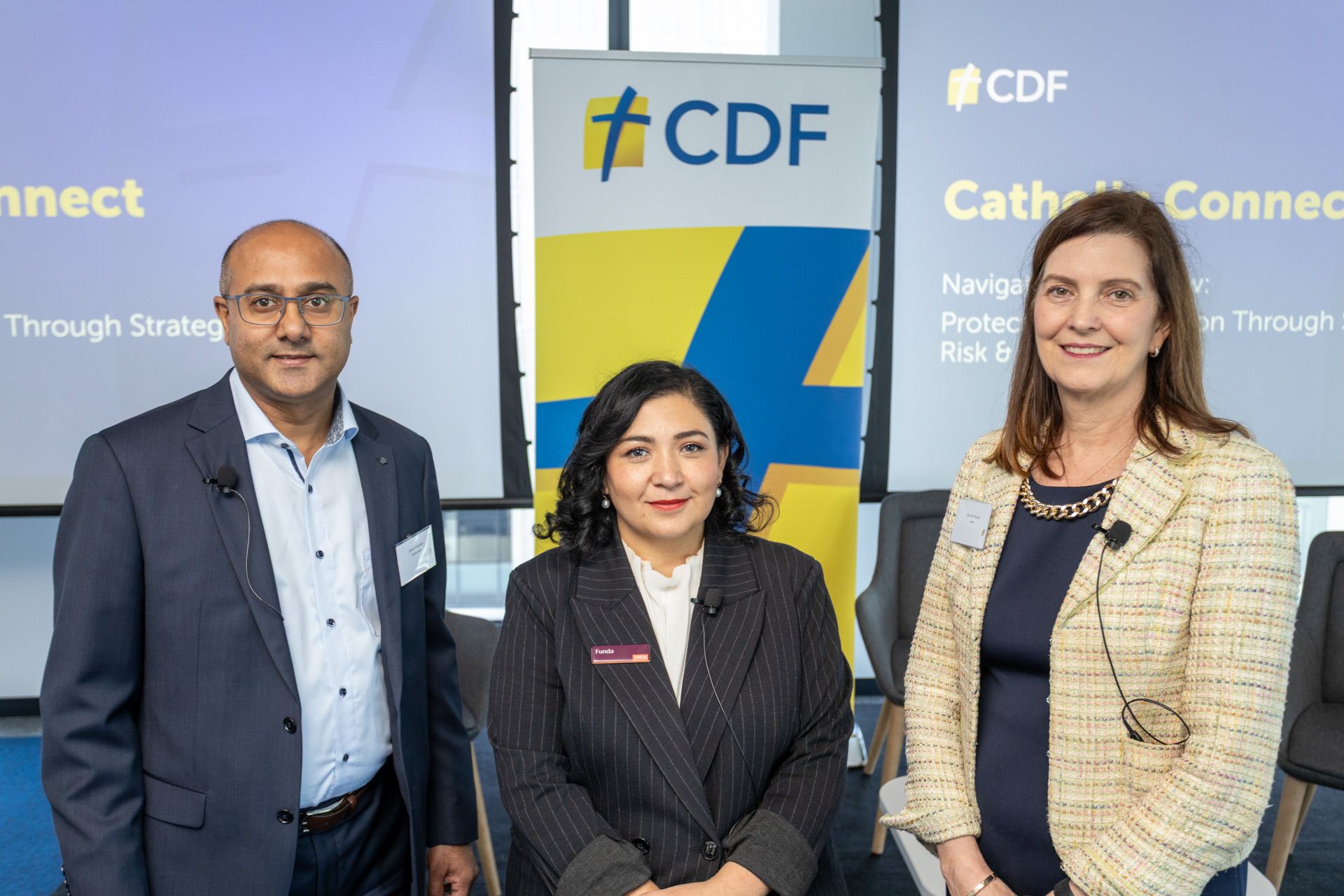
Speakers (from left to right): Jayesh Kapitan, Funda Ozenc and Jacinta Munro
Embracing emerging technologies with prudence
Artificial intelligence was recognised as both a challenge and an opportunity. Jacinta Munro (KPMG) outlined how AI is reshaping compliance, data management, and regulatory landscapes. The theme was clear: organisations must establish guardrails to ensure privacy, accuracy, and ethical use, while exploring pilots that enhance efficiency and strengthen oversight. When guided by human judgment and mission, AI can be an enabler rather than a risk.
Preparing for reform with strategy and discipline
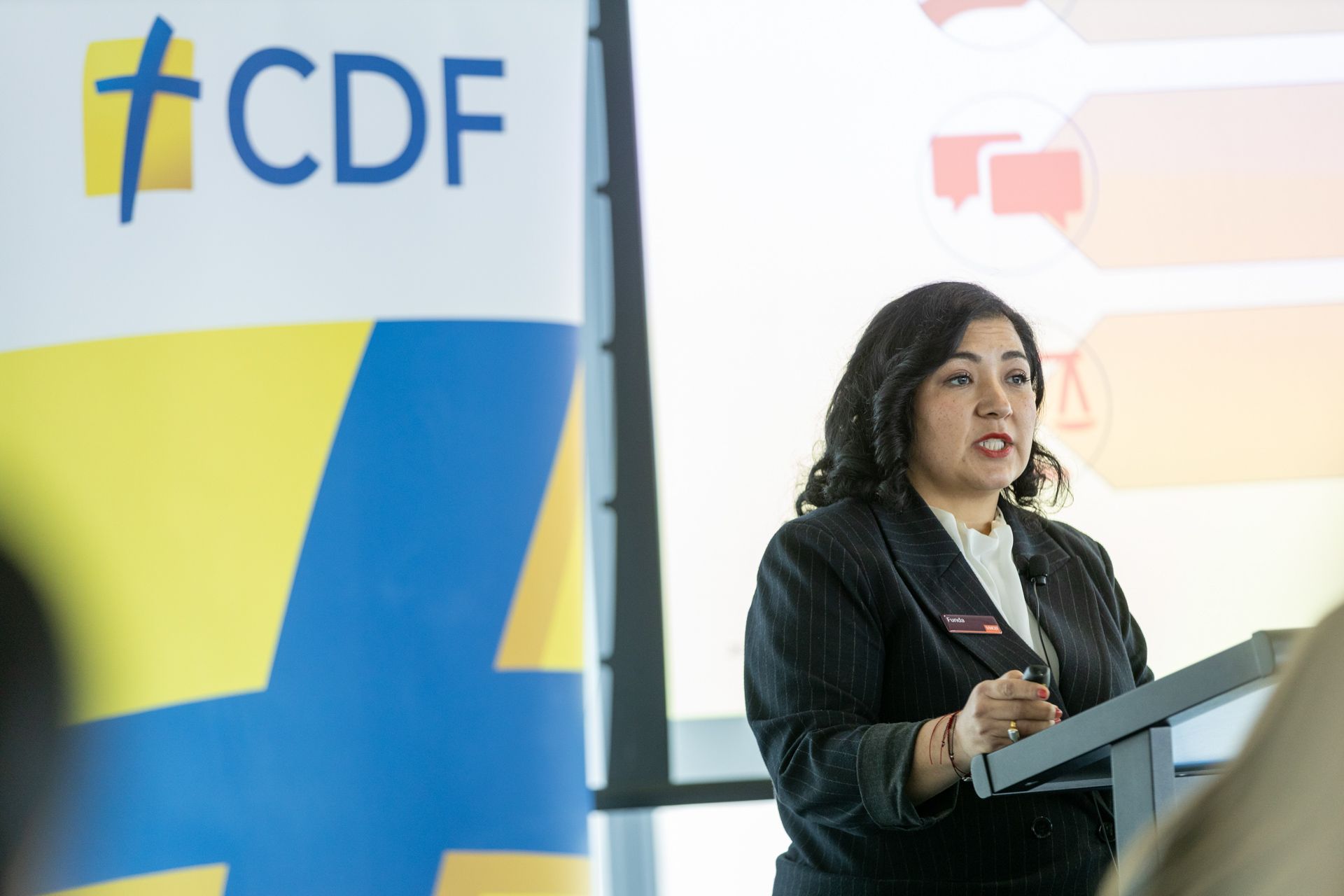
Reform in aged care, particularly the Aged Care Act 2025, was unpacked by Funda Ozenc (VMCH). Funda emphasised the importance of sequencing change—aligning policy updates, workforce education, client communications, and digital upgrades into a clear roadmap. The lesson was practical: approach reform as a staged improvement program, ensuring that compliance strengthens rather than distracts from mission and values.


Building cultures that sustain governance
Jayesh Kapitan (RSM Australia) stressed that governance frameworks succeed only when embedded in organisational culture. Beyond policies and systems, strong governance requires open reporting, constructive escalation, and shared responsibility across leadership and teams. The theme was proactive culture, where risk is seen as a pathway to resilience, not an obstacle to mission.
Staying true to mission
Across each theme, the message was consistent: risk and governance are not bureaucratic burdens, but essential supports for Catholic organisations seeking to live their mission with integrity. With disciplined strategies, prudent adoption of new technologies, and cultures that prioritise openness and accountability, organisations can navigate complexity while keeping purpose, values and mission at their core.


Share this article:
Related articles



CDPF Limited, a company established by the Australian Catholic Bishops Conference, has indemnified the Catholic Development Fund ABN 15 274 943 760 (the Fund) against any liability arising out of a claim by investors in the Fund. In practice, this means your investment is backed by the assets of the Catholic Archdiocese of Melbourne. The Fund is required by law to make the following disclosure. Investment in the Fund is only intended to attract investors whose primary purpose for making their investment is to support the charitable purposes of the Fund. Investors’ funds will be used to generate a return to the Fund that will be applied to further the charitable works of the Archdiocese of Melbourne and the Dioceses of Sale and Bunbury. The Fund is not prudentially supervised by the Australian Prudential Regulation Authority nor has it been examined or approved by the Australian Securities and Investments Commission (ASIC). An investor in the Fund will not receive the benefit of the financial claims scheme or the depositor protection provisions in the Banking Act 1959 (Cth). The investments that the Fund offers are not subject to the usual protections for investors under the Corporations Act (Cth) or regulation by ASIC. Investors may be unable to get some or all of their money back when the investor expects or at all and investments in the Fund are not comparable to investments with banks, finance companies or fund managers. The Fund’s identification statement may be viewed here or by contacting the Fund. The Fund does not hold an Australian Financial Services Licence.