

A new chapter in Catholic education is unfolding in Melbourne's growing north. In May 2026,
Kolbe Catholic College
officially opened and blessed its new St Catherine of Bologna Campus in Mickleham - a milestone that reflects both the extraordinary growth of the region and the enduring mission of Catholic education to form young people in faith, courage and compassion.
A college built for a growing community
Founded in 2008, Kolbe Catholic College is a co-educational secondary college serving families across Melbourne's north under Melbourne Archdiocese Catholic Schools (MACS). The College's established Greenvale campus supported approximately 1,269 students in 2024, and demand has continued to grow strongly.
The new Mickleham campus welcomed its first Year 7 cohort of 156 students at the start of 2026, and the response from families has been immediate. More than 700 applications have already been received across both campuses for Year 7 in 2027, a clear signal of the trust families are placing in Kolbe. Over time, the St Catherine of Bologna Campus will grow into a full Years 7 to 12 secondary college.
The need for new infrastructure is backed by the numbers. Mickleham's population is projected to grow from approximately 17,500 residents in 2021 to more than 66,000 by 2041, with the wider Hume municipality expected to welcome more than 140,000 additional residents over the same period.
Principal Nick Scully says the response has exceeded expectations.
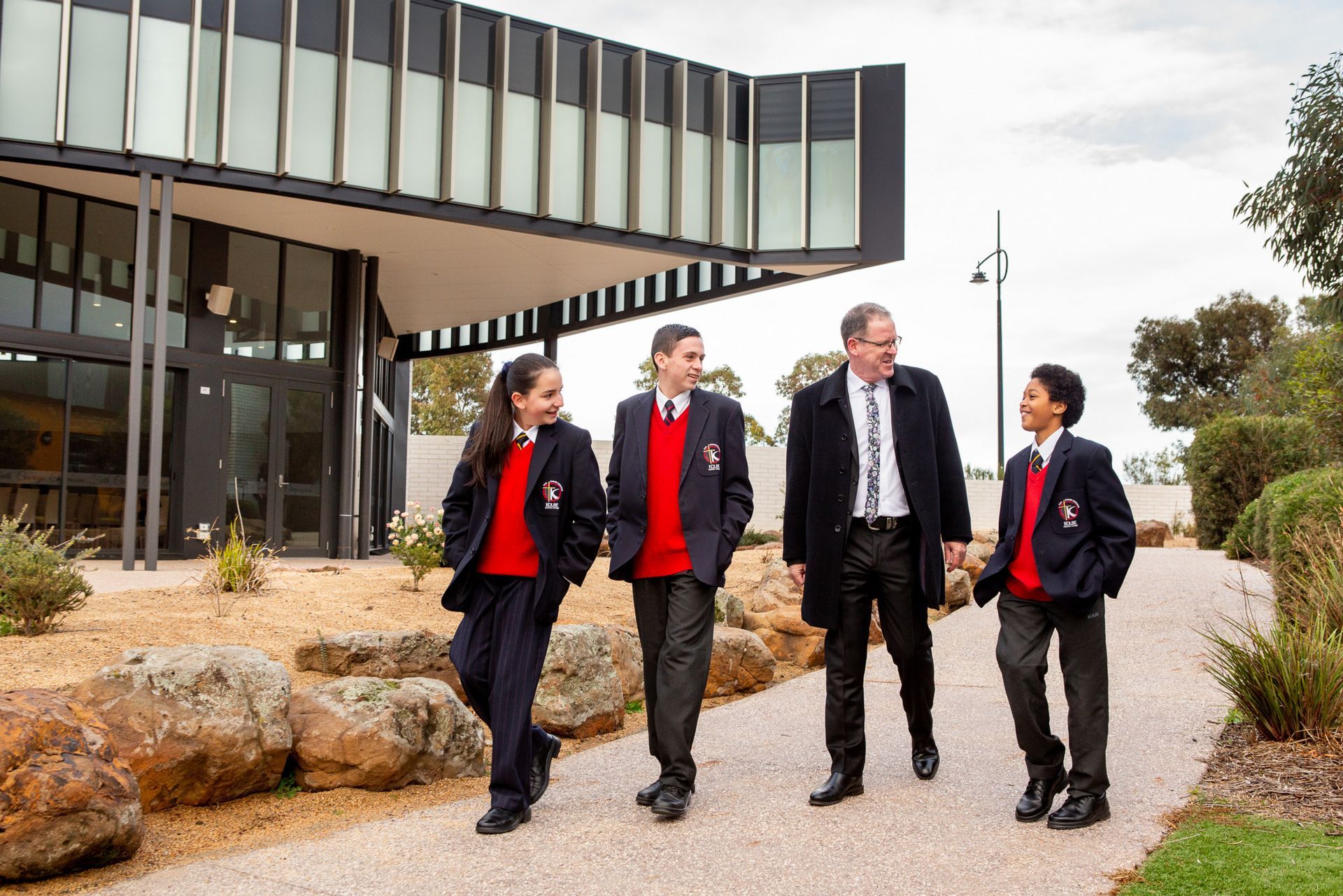
"The response to our new Mickleham campus has been phenomenal... From the very beginning, our vision has been to create a welcoming, future-focused Catholic school where young people can flourish academically, socially, emotionally and spiritually."
Principal Nick Scully
Kolbe Catholic College, Mickleham
Grounded in a rich Franciscan heritage
The new campus draws its identity from two remarkable saints. Kolbe Catholic College takes its name from St Maximilian Maria Kolbe, whose life of courage, sacrifice and unconditional love continues to shape the College's mission, encouraging students to live the Gospel authentically and serve others with generosity and hope.
The naming of the Mickleham campus carries its own significance. St Catherine of Bologna was a 15th century Franciscan mystic, writer and artist, recognised as the patron saint of artists and creativity. Her life and spirit inform the campus' strong focus on Performing and Visual Arts, while reflecting the Franciscan values of community, humility and care for others that sit at the heart of the College.
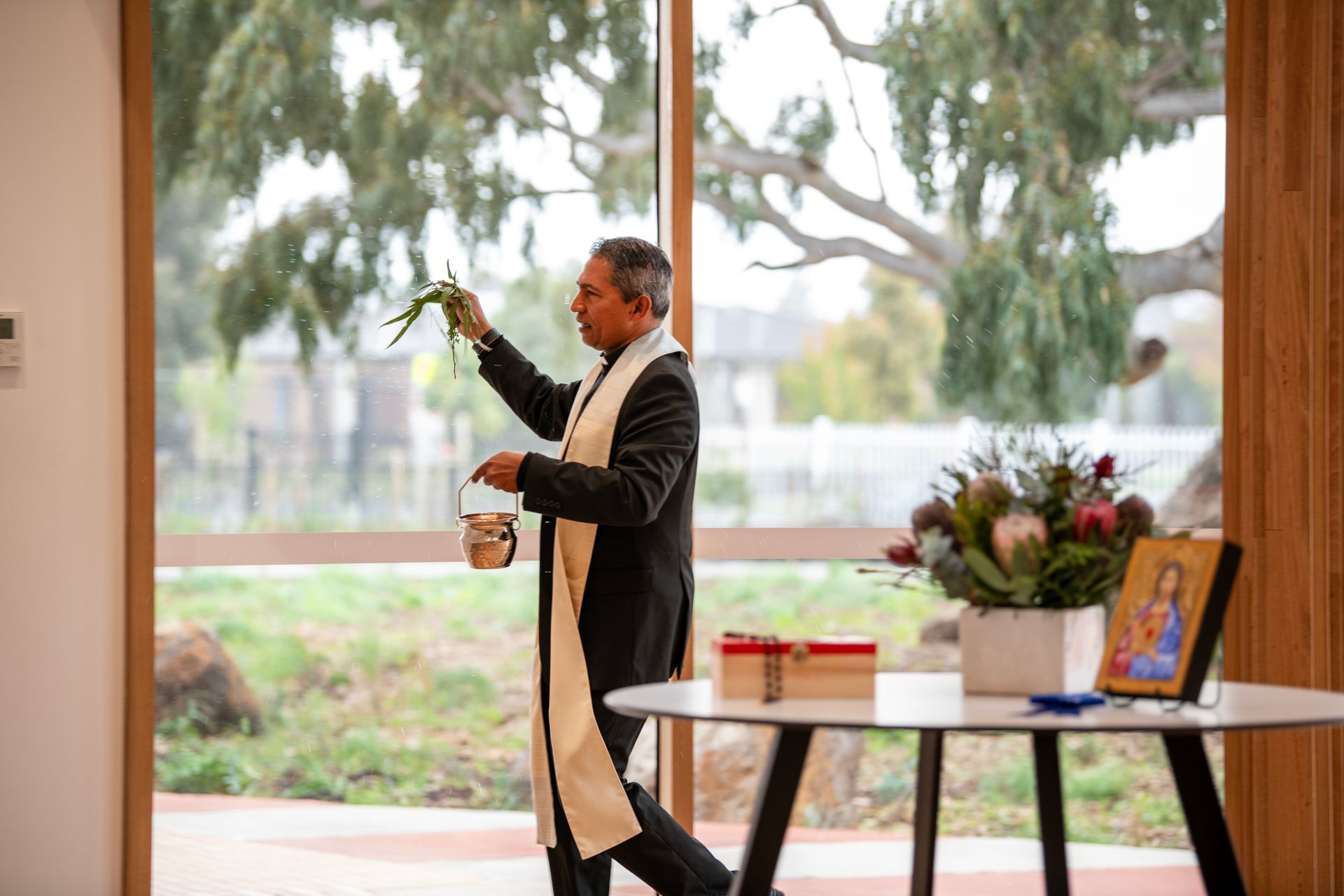
At the official blessing, Fr Dishan Candappa, Kolbe's Custodian of Mission, prayed that the new school would be
"a place of peace and hope" where students are guided by
"wisdom, kindness and courage" in the service of others.
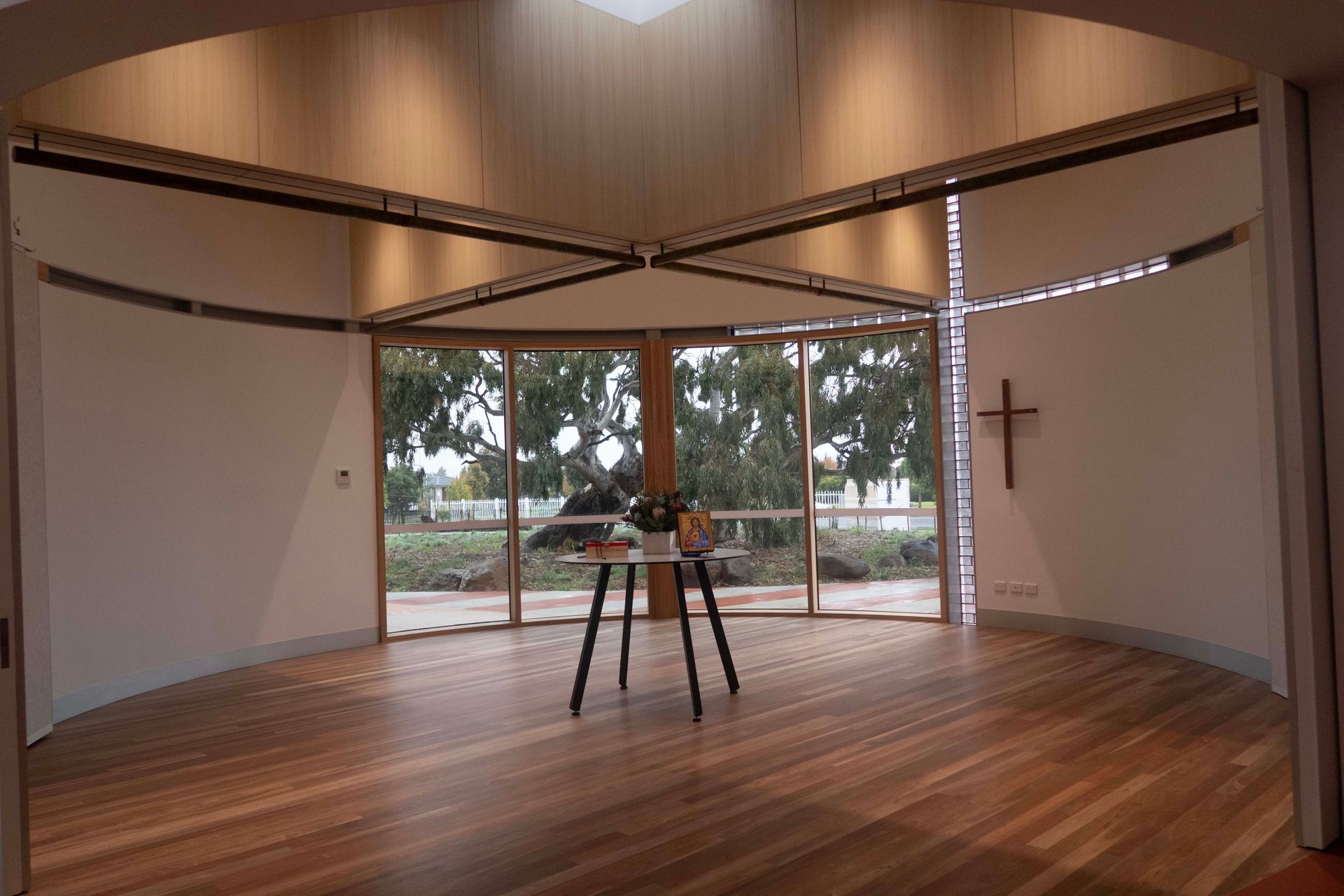
Designed for learning, belonging and creativity
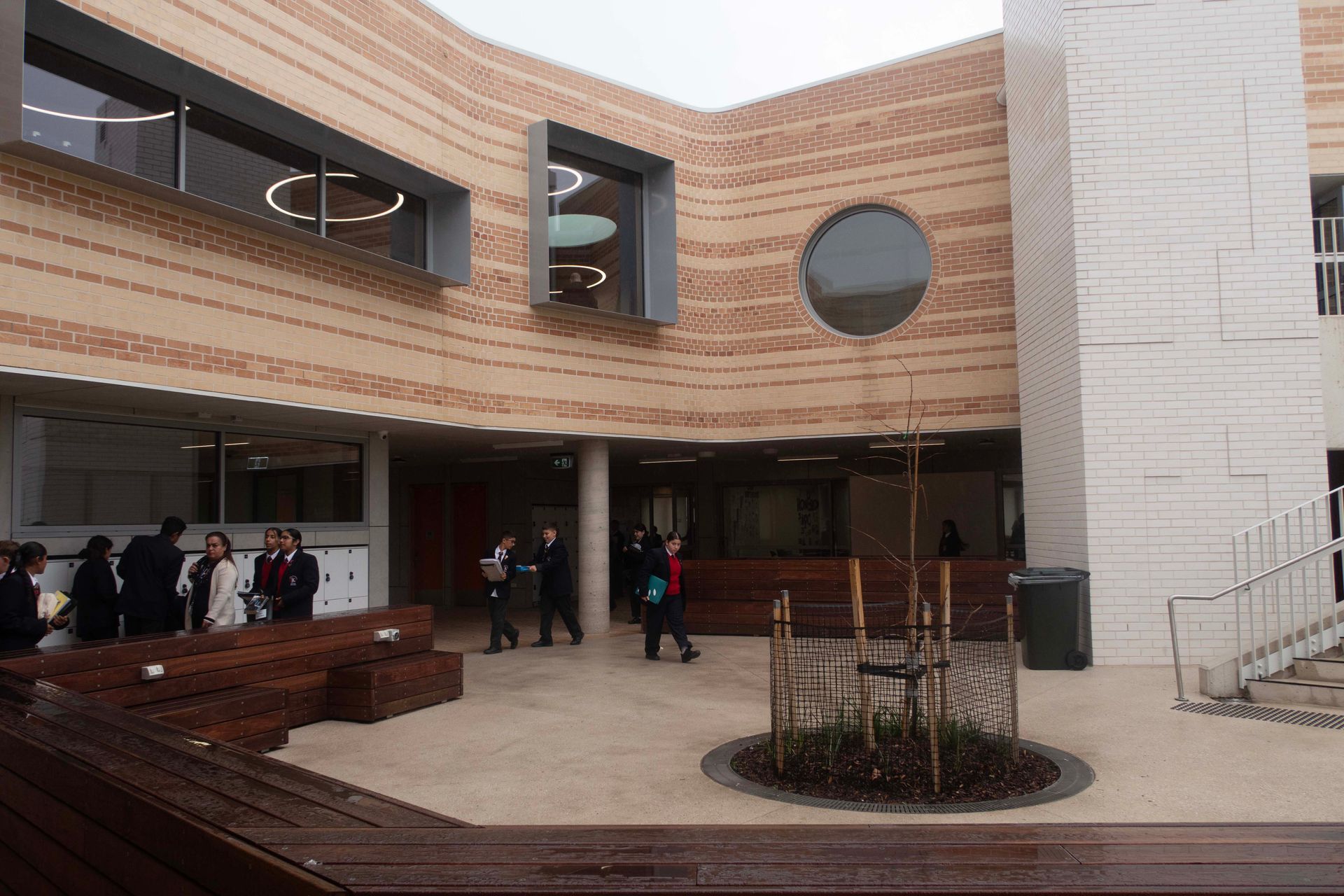
The campus has been thoughtfully designed to support contemporary learning and student wellbeing. Twelve purpose-built learning neighbourhood classrooms and a central administration hub form the heart of the campus, alongside a dedicated Visual Arts building, and specialist pavilions for Music, Drama, Food Technology and Materials Technology.
A large, covered Futsal Court creates opportunities for year-round sport and recreation, while beautifully landscaped pathways and gardens connect the campus - all centred around a preserved 200-year-old tree that has become a defining symbol of the campus' connection to place, history and community.
Supporting the mission
CDF was pleased to support Kolbe Catholic College in bringing this vision to life, providing a $30 million loan to help fund the construction of the new Mickleham campus. It is the kind of project that sits squarely at the heart of what CDF exists to do - empowering Catholic communities to build the infrastructure they need to grow, serve families, and form the next generation in faith.
As the St Catherine of Bologna Campus takes root, it will do so as more than a collection of buildings. It is a place of belonging, formation and opportunity, where young people will be encouraged to discover their gifts, deepen their faith, and contribute to the world around them with courage, compassion and hope.



Your savings can do more than grow. By opening an account with CDF Community Fund, you can earn a competitive rate of interest while empowering Catholic organisations like Kolbe Catholic College to build, serve, and grow. It's a greater return than money alone. Learn more and apply today.
Share this article:
Related articles



CDPF Limited, a company established by the Australian Catholic Bishops Conference, has indemnified the Catholic Development Fund ABN 15 274 943 760 (the Fund) against any liability arising out of a claim by investors in the Fund. In practice, this means your investment is backed by the assets of the Catholic Archdiocese of Melbourne. The Fund is required by law to make the following disclosure. Investment in the Fund is only intended to attract investors whose primary purpose for making their investment is to support the charitable purposes of the Fund. Investors’ funds will be used to generate a return to the Fund that will be applied to further the charitable works of the Archdiocese of Melbourne and the Dioceses of Sale and Bunbury. The Fund is not prudentially supervised by the Australian Prudential Regulation Authority nor has it been examined or approved by the Australian Securities and Investments Commission (ASIC). An investor in the Fund will not receive the benefit of the financial claims scheme or the depositor protection provisions in the Banking Act 1959 (Cth). The investments that the Fund offers are not subject to the usual protections for investors under the Corporations Act (Cth) or regulation by ASIC. Investors may be unable to get some or all of their money back when the investor expects or at all and investments in the Fund are not comparable to investments with banks, finance companies or fund managers. The Fund’s identification statement may be viewed here or by contacting the Fund. The Fund does not hold an Australian Financial Services Licence.