

In the vast expanse of the digital world, our passwords are the gatekeepers standing between our sensitive information and the prying eyes of cybercriminals. Yet, as we navigate through the virtual landscape, it's alarmingly easy to overlook the importance of fortifying our passwords on a regular basis.
The Vulnerability of Weak Passwords
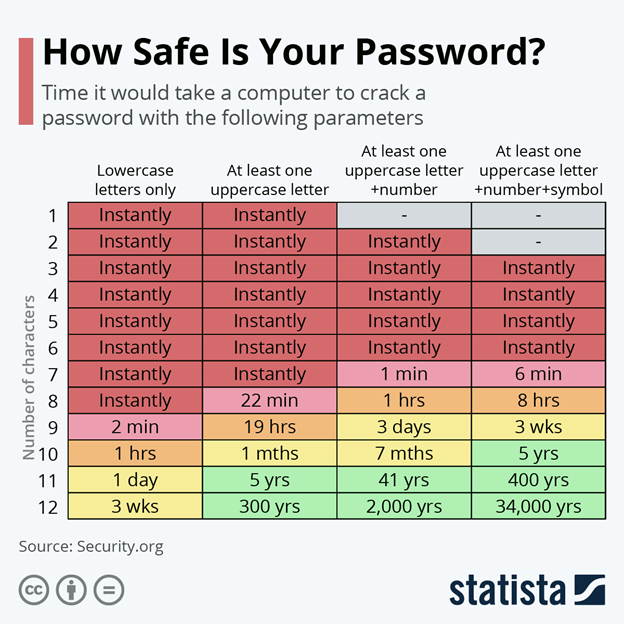
Weak passwords, akin to flimsy locks on a treasure chest, invite trouble with open arms. Here's a stark reality: a mere 7-character password can be cracked in a mind-bogglingly short span of 2 seconds. Add a few symbols, and you extend that to a meager 4 seconds. In the blink of an eye, your fortress is breached, leaving your personal data exposed to malicious intent.
Reusing passwords across multiple accounts is akin to employing the same key for every door in your house. Once a cybercriminal unlocks one door, they have access to the entire residence of your digital identity. It's a convenience we cannot afford.
The Armor of Strong Passwords
Imagine your password as a robust fortress, impervious to the relentless onslaught of cyber threats. Strengthening your digital defenses begins with the adoption of strong passwords. Here's where the numbers tell a compelling tale: a 12-character password transforms the game entirely, turning the tables on potential hackers. With such a fortress in place, it would take a staggering 53 years to crack the code.
Recommendations for Reinforcement
1. Passphrases: Gone are the days of cryptic combinations of letters, numbers, and symbols. Embrace the simplicity and strength of passphrases – strings of words that are easy to remember but hard to crack
Some example passphrases to get you thinking:
MayTheForceBeWithYou - is a passphrase, but also a movie quote, not ideal
MayThe4thBw1thY0u - is stronger but this is complicated and difficult to remember
Isn't Baby Yoda the cutest green alien in the galaxy? - this passphrase is lengthy yet robust and much easier to remember. Incorporating random words also enhances security
2. Multi-Factor Authentication (MFA): Elevate your security measures with the addition of MFA. By requiring multiple forms of verification, such as a password combined with a fingerprint or a one-time code, you create an additional layer of defense against unauthorised access.
3. Password Managers: Bid farewell to the chaos of remembering numerous passwords for various accounts. Harness the power of password managers to securely store and generate complex passwords, granting you peace of mind without sacrificing convenience.
We’re Here to help
In the ever-evolving landscape of cybersecurity, the significance of strong passwords cannot be overstated. Remember, the strength of your digital fortress lies in the keystrokes of our passwords.
Cyber-scams will always be prevalent in the online world; but by working together we can help detect and prevent suspicious activity.
If you think you’ve been a victim of a scam or are worried about the security of your CDF accounts, contact us today.
Share this article:
Related articles



CDPF Limited, a company established by the Australian Catholic Bishops Conference, has indemnified the Catholic Development Fund ABN 15 274 943 760 (the Fund) against any liability arising out of a claim by investors in the Fund. In practice, this means your investment is backed by the assets of the Catholic Archdiocese of Melbourne. The Fund is required by law to make the following disclosure. Investment in the Fund is only intended to attract investors whose primary purpose for making their investment is to support the charitable purposes of the Fund. Investors’ funds will be used to generate a return to the Fund that will be applied to further the charitable works of the Archdiocese of Melbourne and the Dioceses of Sale and Bunbury. The Fund is not prudentially supervised by the Australian Prudential Regulation Authority nor has it been examined or approved by the Australian Securities and Investments Commission (ASIC). An investor in the Fund will not receive the benefit of the financial claims scheme or the depositor protection provisions in the Banking Act 1959 (Cth). The investments that the Fund offers are not subject to the usual protections for investors under the Corporations Act (Cth) or regulation by ASIC. Investors may be unable to get some or all of their money back when the investor expects or at all and investments in the Fund are not comparable to investments with banks, finance companies or fund managers. The Fund’s identification statement may be viewed here or by contacting the Fund. The Fund does not hold an Australian Financial Services Licence.