
Cyber Security

Action Month 2026


Security | Cyber Security Awareness Month

OCTOBER 2026 - CYBER SECURITY AWARENESS MONTH


Take a Second.
Stay Secure.

Practical advice to protect you, your information and organisation, built around CDF's own framework: Pause. Check. Protect.

Register for Securing Australia Together 2026

Pictured: CDF Staff

A cybercrime is reported in Australia roughly every 6 minutes.


October is Cyber Security Awareness Month. This year’s theme, Take a second. Stay secure. reminds us that a moment of caution can help prevent cyber threats.


Simple, consistent actions can help protect your accounts, information and devices this October - and every month after it.


Source: Australian Signals Directorate, Annual Cyber Threat Report 2023-24.

Key Recommendations


Explore the key cyber security recommendations from the Australian Government's National Officer of Cyber Security:

Apply updates

Keep devices, operating systems and apps updated to protect against known security risks. 

Perform regular backups

Regular backups help protect data and reduce impacts if something goes wrong. 

Turn on MFA for online services

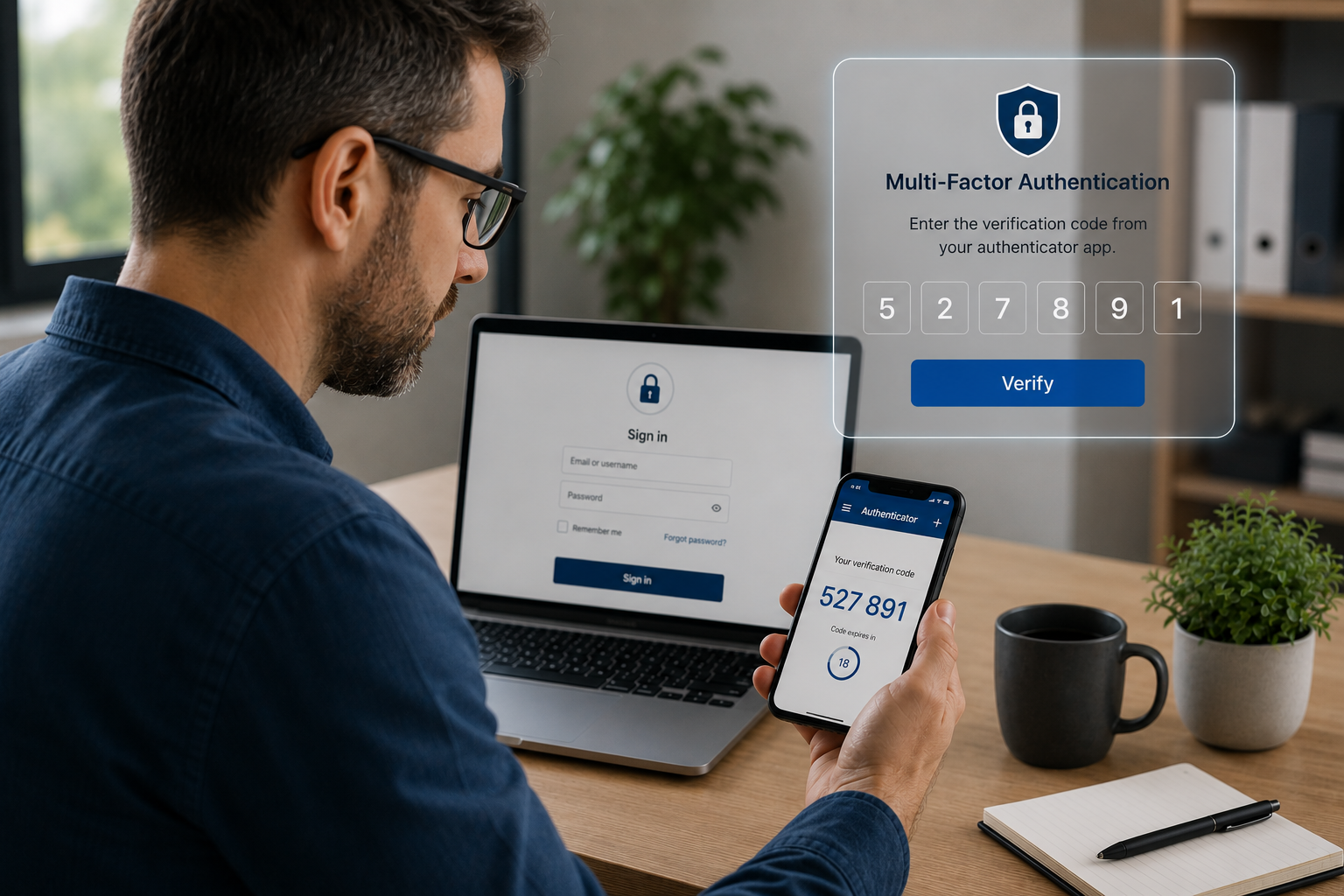
Adding an extra step at sign-in makes it harder for others to access your accounts. Add MFA to your CDF Online account.

Learn to recognise scams & report them

Know the signs of a scam so you can avoid and report them. This helps protect yourself and others. Contact us or report to Australian Cyber Security Centre today.

Set long unique passphrases

Long, unique, passphrases help keep accounts secure and reduce the chance of compromise.  Learn more about setting secure passphrases.

Know the threats

Knowing common cyber threats helps you spot them and respond appropriately.

Check and manage privacy settings

Reviewing privacy settings helps you understand and control who can see and access your private information. 

Think before you share on socials

Think twice before sharing on social media. Pausing before sharing lets you decide if you really need to share that information online. Learn more about whether you're oversharing online and social media.

Securing Australia Together 2026


A live online panel discussion featuring the National Cyber Security Coordinator and chief security officers from Australia's major banks.

Helpful Resources


5-minute cyber health check

Use this free tool from the Australian Signals Directorate to conduct a basic cyber security assessment.

Cyber health check tool

Are you ClickFit?

Read this guide from Australian Federal Police to learn more about recognising the warning signs of cybercrime

Take the quiz

CDF Security Centre

Learn more about the latest scams, how to spot them, and how you can help us keep your funds safe.
Pause. Check. Protect
August 25, 2026
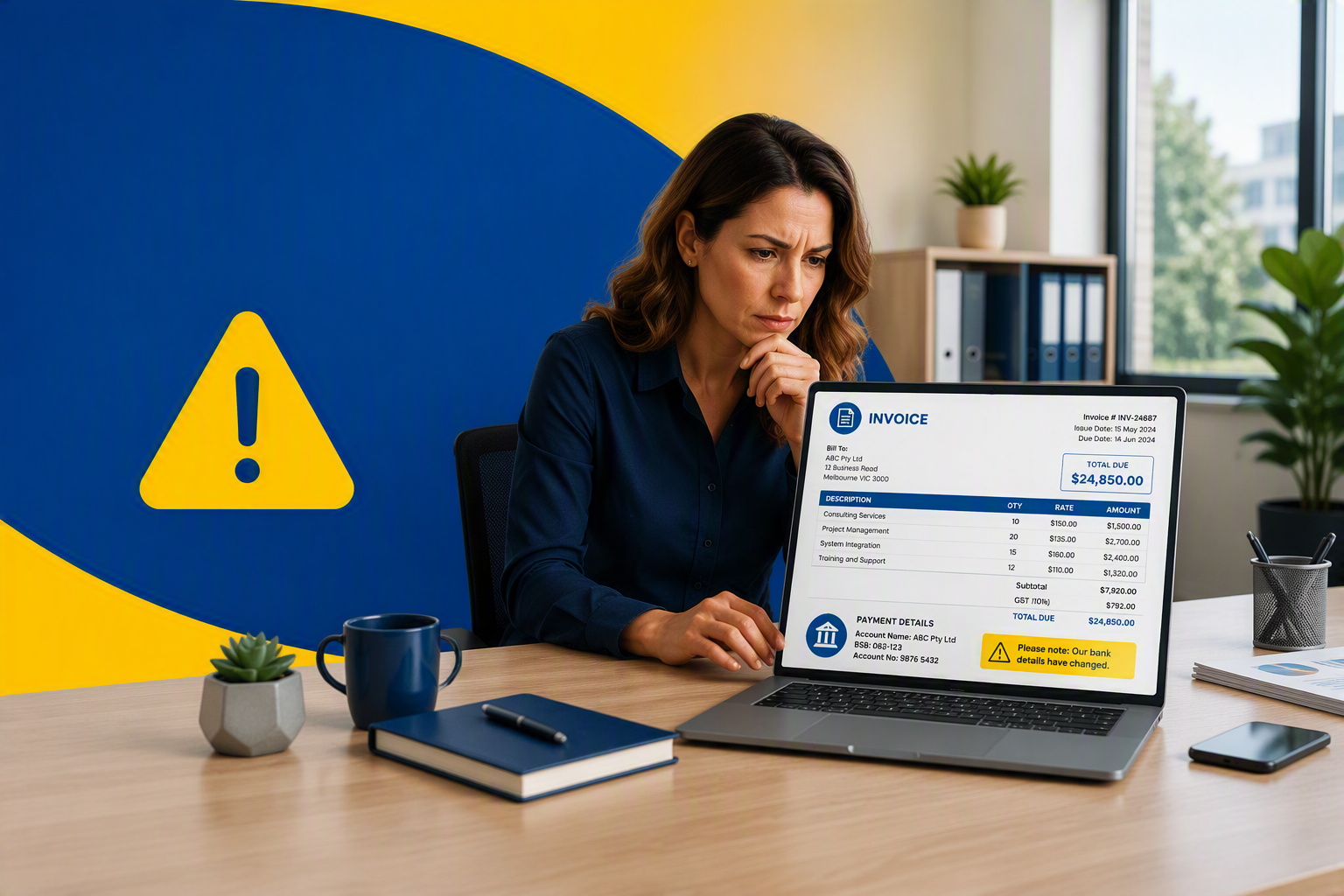
Australians reported 481,523 scams in 2025 , with 274,577 reports involving financial losses totalling $2.18 billion . Behind those numbers are scams that are becoming increasingly difficult to spot. For organisations, one of the most convincing can begin with something as routine as an invoice. Invoice fraud is becoming increasingly sophisticated. The email may come from a supplier you know. The invoice may look exactly like previous ones. The amount is correct, the project is familiar, and the message may even sit inside a genuine email thread. The only thing that's changed is the bank account. That one change can redirect thousands of dollars into a cyber criminal's hands. How it happens Invoice fraud, also known as payment redirection fraud, is a common form of Business Email Compromise (BEC). Criminals gain access to a real email account - through phishing, stolen credentials, malware or a data breach - then quietly monitor it. They learn who approves payments, how invoicing cycles work, and wait for the right moment to intercept a genuine transaction and simply change the bank details. Because nothing else changes, it's very hard to spot. Example of What a Scam Looks Like
July 6, 2026
Cyber criminals are constantly looking for the easiest way into your systems, and unfortunately, passwords alone are no longer enough. Even strong passwords can be compromised through phishing emails, data breaches, malware or social engineering attacks. Once a criminal has your password, gaining access to email, cloud platforms, financial systems and sensitive information can be alarmingly straightforward. This is where Multi Factor Authentication (MFA) becomes one of the most effective cyber security controls available. Think of it as a second lock on your front door: a stolen password may open the first, but MFA prevents criminals from walking straight in.
April 1, 2025
In a world where the threat of fraud is constantly evolving, staying safe online is not just good practice — it’s essential. CDF recently helped identify and stop a fraud attempt on a client account that could have led to the loss of a significant amount of money. Here’s how it unfolded and what you can learn to protect your own digital security at home and at work. The power of human firewalls This situation, involving a current CDF customer, showcases a recent prevented fraud attempt: CDF received a transfer request from a registered client’s email address The transfer request involved making a payment to a new account, which the client had not previously transacted to CDF staff followed internal processes, requesting additional verification from the client When the fraudster couldn't provide further information, the staff member called the client directly This phone call revealed the email account had been compromised In this attempt, it was the human element that added the extra layer of security to an already robust internal process – it demonstrates the importance of proper security procedures when handling transfer requests, especially to new bank accounts. " Technology like emails can be compromised and used for fraud. Staying proactive, adhering to processes, and maintaining regular training is critical ," says CDF Information Security Manager, David Huang.

Help & Support


If you need to get in contact with us, there are a number of ways we can help. Our team are available to assist from Monday to Friday 9am - 5pm (AEST).

1800 134 135

PO Box 174 East Melbourne VIC 8002

How can we help?

Fill out the form below and our team will get back to you shortly.