

Nourishing body and soul within our community
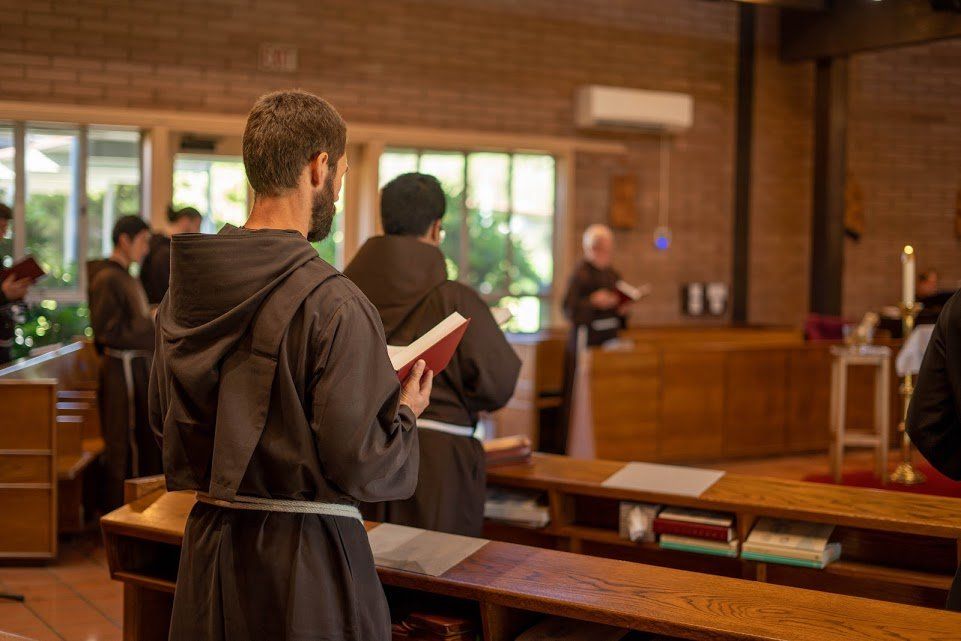
The Capuchin Friars are a Catholic Religious Order of priests and brothers committed to living the Gospel as a brotherhood. There are over 10,500 friars across the world in 100 countries. Inspired by the life and writings of St Francis of Assisi, they strive to authentically live a life of prayer, fraternity and ministry as brothers in simplicity, humility and joy.
Melbourne is blessed to have the presence of the Capuchin Friars located in Hawthorn and South Melbourne. For the past three years, Bro. Michael O Dwyer OFMCAP, along with this fellow Capuchins and parish volunteers, have been assisting the poor and homeless.
The Friars prepare between 40 and 70 nourishing, delicious and wholesome meals each day at the Open House Kitchen. This is a space where they welcome the poor and marginalised to share food, hot drinks and fellowship. Bro. Michael and the team believe that the time spent talking with people and acknowledging them, is as important as the meals themselves.
In addition to Open House Kitchen, the Friars also serve food to the homeless on the streets twice a week from their soup van. Working together they create a place of welcome, conversation and human comfort for all who need support.
The Capuchin Friars have had a savings account with CDF for nearly 20 years. Fr John Spiteri is impressed with the efficient, quick and positive service they experience, every time they contact their Relationship Manager, Aaron Gupta.
Fr John says, “The values of CDF align to ours, and it gives us peace of mind knowing our money is secure. I know that by placing our funds with CDF, these will in turn be used for loans that support others, like us, who are helping others in the community.
Pictures: Capuchin Franciscans Australia
Share this article:
Related articles



CDPF Limited, a company established by the Australian Catholic Bishops Conference, has indemnified the Catholic Development Fund ABN 15 274 943 760 (the Fund) against any liability arising out of a claim by investors in the Fund. In practice, this means your investment is backed by the assets of the Catholic Archdiocese of Melbourne. The Fund is required by law to make the following disclosure. Investment in the Fund is only intended to attract investors whose primary purpose for making their investment is to support the charitable purposes of the Fund. Investors’ funds will be used to generate a return to the Fund that will be applied to further the charitable works of the Archdiocese of Melbourne and the Dioceses of Sale and Bunbury. The Fund is not prudentially supervised by the Australian Prudential Regulation Authority nor has it been examined or approved by the Australian Securities and Investments Commission (ASIC). An investor in the Fund will not receive the benefit of the financial claims scheme or the depositor protection provisions in the Banking Act 1959 (Cth). The investments that the Fund offers are not subject to the usual protections for investors under the Corporations Act (Cth) or regulation by ASIC. Investors may be unable to get some or all of their money back when the investor expects or at all and investments in the Fund are not comparable to investments with banks, finance companies or fund managers. The Fund’s identification statement may be viewed here or by contacting the Fund. The Fund does not hold an Australian Financial Services Licence.